5cm Wide Base, Cylinder Vase STL File: A Practical Guide for Creators
The world of 3D printing has shifted from hobbyist tinkering to a legitimate source of home decor and small business revenue. Among the most versatile designs available today is the 5cm Wide Base, Cylinder Vase STL File. This digital blueprint represents more than just a simple geometric shape; it is a foundation for creating sleek, modern containers that fit seamlessly into any interior. Whether you are looking to organize your desk, add a touch of minimalism to your living room, or start selling physical prints, understanding how to utilize this specific file correctly is the difference between a wasted filament and a polished product.
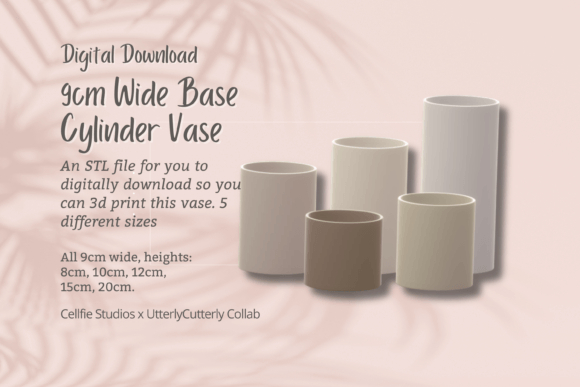
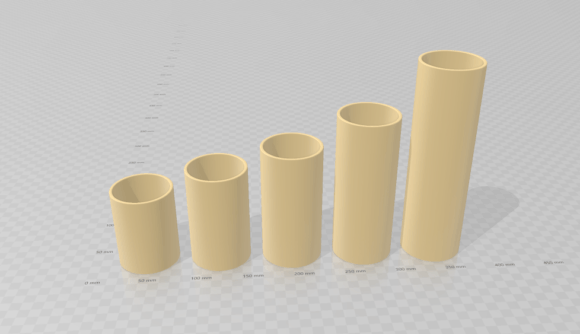
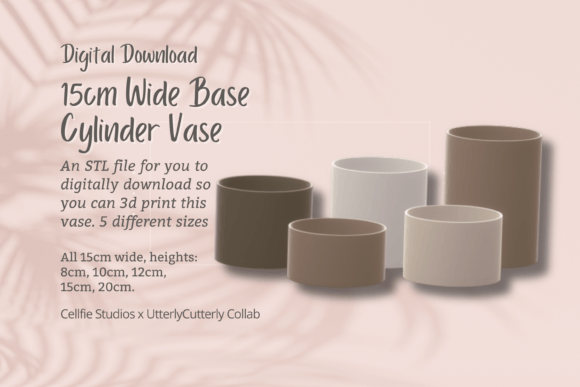
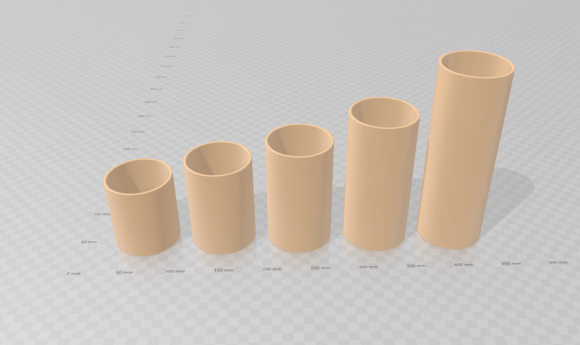
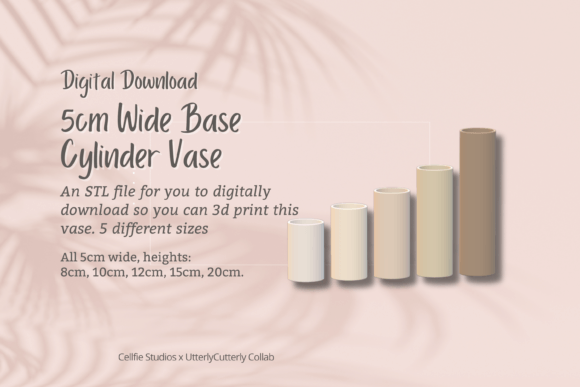
Many beginners assume that downloading an STL file guarantees a perfect print immediately. This is a common misconception. While our designs undergo rigorous quality-checking systems before being listed, the final result depends heavily on how you approach the slicing and printing process. The 5cm Wide Base, Cylinder Vase STL File comes in five distinct heights—8cm, 10cm, 12cm, 15cm, and 20cm—all sharing that consistent 5cm width. This uniformity is intentional, designed to create cohesive sets, but it also requires specific attention to detail during setup.
Understanding the Versatility of the Cylinder Design
Why choose a cylinder with a 5cm base? In interior design, scale matters. A container that is too wide can overwhelm a small workspace, while one that is too narrow may look flimsy. The 5cm diameter strikes a balance, making it ideal for storing pens, makeup brushes, tools, or even holding a single stem flower. Its minimalist aesthetic allows it to blend into bedrooms, bathrooms, or professional offices without clashing with existing decor.
For entrepreneurs, this versatility translates to marketability. You can print these vases in various colors and textures to target different niches. However, simply having the file is not enough. You must understand the limitations and opportunities of the geometry. For instance, the smooth, curved surface of a cylinder is excellent for showcasing color gradients, but it can be prone to layer lines if not printed with the correct settings. Recognizing these nuances early saves time and material costs.
Common Mistakes When Using Digital Vase Files
Even experienced printers can stumble when rushing through a project. One of the most frequent errors involves ignoring the scale of the model relative to its intended use. Because this pack includes multiple heights, users sometimes select a size without considering the stability of the object. A 20cm tall vase with a 5cm base has a high center of gravity. If placed on a wobbly surface or filled with heavy items like large tools, it becomes top-heavy and prone to tipping over.
Another overlooked detail is the wall thickness. Many free or low-quality STL files have walls that are too thin for standard nozzles, leading to leaks or structural weakness. Our files are tested to ensure they are easily printable, but you still need to verify your slicer settings. If you set the wall thickness in your software to be less than your nozzle diameter, the printer will struggle to extrude properly, resulting in gaps or failed prints. Always double-check that your infill and wall parameters align with the physical constraints of the model.
The Impact of Poor Slicing Choices
Mistakes in the slicing phase can ruin the presentation of your final piece. For a minimalist design like this cylinder, visual perfection is key. If you use a high layer height to speed up the print, the "ringing" effect or visible steps along the curve will become obvious. This detracts from the sleek, modern look that makes the vase appealing as a gift or a saleable item.
Furthermore, neglecting support structures where necessary can lead to deformation. While a simple cylinder often does not require supports, variations in the rim or base might. If you skip the support check because "it's just a cylinder," you risk warping at the edges. Warped edges make the vase difficult to fill or place flat on a table, rendering it useless for its intended purpose.
How to Avoid Pitfalls and Ensure Quality Results
To get the best results from the 5cm Wide Base, Cylinder Vase STL File, adopt a methodical approach. Start by inspecting the file in your CAD viewer before sending it to the slicer. Look for any non-manifold edges or holes that could cause issues. Since this is a digital download, you have the advantage of being able to manipulate the file before committing to hours of printing time.
Adjust your print settings for aesthetics:
- Layer Height: For a smooth finish on the cylinder walls, consider using a lower layer height (e.g., 0.12mm to 0.16mm) rather than the standard 0.2mm.
- Wall Perimeters: Increase the number of perimeters to ensure the vase is sturdy enough to hold liquids or heavy objects without leaking or cracking.
- Infill Density: Unless you plan to cut the vase open later, a lower infill percentage (10-15%) is usually sufficient for a vase, saving material and time while maintaining rigidity.
It is also crucial to test your adhesion. Tall, thin cylinders can detach from the build plate due to thermal contraction as the print cools. Use a brim or raft in your slicer settings to increase the surface area contact. This small adjustment prevents the entire print from failing halfway through, which is a frustrating waste of resources.
Evaluating Your Needs Before Downloading
Before purchasing or downloading any digital file, ask yourself what you intend to do with it. Are you printing a single item for personal use, or are you planning to mass-produce them for resale? If you are an entrepreneur, consistency is vital. The fact that this pack includes five sizes allows you to create matching sets, which often sell better than single units. However, ensure your printer bed is large enough to accommodate the tallest version (20cm) if you plan to print all sizes.
Remember, this is a digital product. You will receive access to download the files after payment, not a physical item. This means the responsibility for the final quality lies partly with your equipment and skills. Do not buy the file expecting it to solve hardware issues. If your printer is poorly calibrated, even the best-tested STL file will yield subpar results. Take the time to level your bed and calibrate your extruder first.
Expanding Your Creative Possibilities
Once you have mastered the basics of printing the 5cm Wide Base, Cylinder Vase STL File, the possibilities expand. You can experiment with different filaments, such as wood-fill for a rustic look or silk PLA for a luxurious sheen. These variations allow you to tailor the product to specific markets or personal tastes.
We regularly update our store with new STL files, including other widths and the "mega bundle" of cylinder vases. Exploring these options can help you diversify your portfolio or find the perfect fit for a specific space. By understanding the strengths and potential pitfalls of these designs, you position yourself to create high-quality, functional art that stands out. Avoid the rush, respect the process, and let the precision of the design enhance your creative output.