Mastering the Geometric Hex Vase Planter 3D Print STL File for Modern Interiors
The intersection of digital design and physical utility has created a new landscape for home organization and decor. At the forefront of this shift is the Geometric Hex Vase Planter 3D Print STL File, a digital asset that empowers users to create sleek, functional containers tailored to their specific spatial needs. Unlike traditional mass-produced items found in retail stores, this digital download offers a level of customization and immediate accessibility that resonates with makers, interior designers, and small business owners alike. By leveraging the capabilities of additive manufacturing, individuals can transform a simple data file into a tangible object that enhances any environment, from a cluttered work desk to a serene living area.
The Aesthetic Appeal of Hexagonal Geometry in Modern Design
Modern interior design often leans towards minimalism, where form follows function without unnecessary ornamentation. The hexagonal shape is particularly effective in this context because it mimics natural structures like honeycombs while maintaining a sharp, architectural edge. When you utilize a digital download of a 3d geometric vase planter style pot stl file, you are introducing an element of mathematical precision into your space. This specific geometry allows for efficient stacking and tiling if multiple units are used, creating visually striking patterns that draw the eye without overwhelming the senses.
The versatility of this design extends beyond its shape. The surface texture generated by FDM (Fused Deposition Modeling) or SLA (Stereolithography) printing processes adds a tactile dimension that smooth plastic or ceramic often lacks. Whether printed in matte PLA for a soft look or glossy resin for a polished finish, the hexagonal facets catch light differently depending on the angle of view. This interplay of light and shadow makes the container a dynamic piece of decor, suitable for holding succulents in a sunlit bathroom or serving as a bold statement piece in a bedroom corner.
Adapting Scale to Your Environment
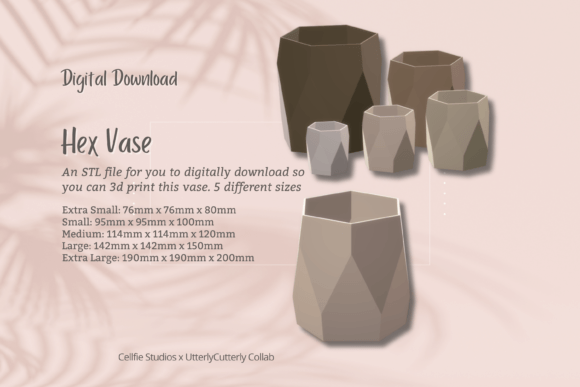
One of the most significant advantages of purchasing a digital file over a physical product is the ability to select the perfect scale for your intended use. This particular pack includes five distinct sizes, ensuring that there is a solution for every organizational challenge. The Extra Small variant, measuring 76mm x 76mm x 80mm, is ideal for desktop environments where space is at a premium. It serves perfectly as a holder for pens, styluses, or makeup brushes, keeping essential tools within arm's reach while maintaining a tidy surface.
Stepping up to the Small size (95mm x 95mm x 100mm) opens up possibilities for larger writing instruments or small potted plants like cacti. The Medium option (114mm x 114mm x 120mm) strikes a balance, making it suitable for kitchen counters to hold utensils or for entryway tables to organize keys and mail. For those looking to make a bolder statement, the Large (142mm x 142mm x 150mm) and Extra Large (190mm x 190mm x 200mm) versions provide ample volume for floor-standing arrangements or substantial tool storage in a workshop setting. This range of dimensions ensures that the design is not limited to a single application but can evolve with the user's changing needs.
Practical Applications Beyond Planters
While the primary categorization of this item is a "vase planter," its utility extends far beyond horticulture. In professional settings, the hexagonal structure provides stability and visual order. Educators might find the smaller sizes useful for organizing classroom supplies, while researchers could use them to categorize lab equipment or reference materials. The open-top design facilitates easy access, and the rigid walls prevent items from toppling over easily.
In a creative workspace, these containers become integral to the workflow. Artists often require organized storage for brushes, markers, and pencils. The Geometric Hex Vase Planter 3D Print STL File allows creators to print these holders in colors that match their studio aesthetic, fostering a cohesive and inspiring environment. Similarly, hobbyists who engage in crafting, electronics repair, or model building can utilize the larger sizes to store screws, wires, and small components, preventing loss and damage.
The bathroom is another prime location for these organizers. The moisture-resistant nature of many 3D printing filaments, such as PETG, makes them suitable for damp environments. They can hold toothbrushes, hair styling tools, or cosmetic applicators, replacing bulky, mismatched containers with a unified, modern system. The ability to print these items at home means they can be replaced instantly if they become damaged or stained, offering a level of sustainability and convenience that disposable alternatives cannot match.
The Workflow: From Digital File to Physical Object
For those new to the world of 3D printing, the process of transforming a digital file into a physical object can seem daunting. However, this specific design is optimized for ease of printing. The file is part of a collection where all products undergo rigorous testing before being sold, adhering to a standard quality-checking system. This ensures that the geometry is watertight, the wall thickness is appropriate for structural integrity, and the orientation minimizes the need for support material.
When you purchase this item, you are acquiring a digital download. There is no physical shipping involved; instead, you gain immediate access to the files after payment. This instant delivery model allows for rapid prototyping and iteration. Once downloaded, the STL file can be imported into slicing software like Cura, PrusaSlicer, or Bambu Studio. Users can adjust infill density to control weight and strength, choose layer heights for detail versus speed, and select materials based on the intended environment.
It is important to note that this is not a physical item delivered to your door. You must have access to a 3D printer or a local service bureau to realize the final product. If you own a printer, the cost per unit is significantly lower than buying similar items in a store, especially when considering the five sizes included in the pack. For those without a printer, the file can be sent to a professional printing service, though this incurs additional costs for material and labor. Regardless of the method, the result is a high-quality, custom-made organizer that fits your exact specifications.
Material Selection and Durability Considerations
The longevity and performance of the printed planter depend heavily on the material chosen. For indoor decorative use, PLA (Polylactic Acid) is a popular choice due to its ease of printing and wide color variety. However, if the container will be placed in a bathroom or near a window with direct sunlight, PLA may warp over time. In such cases, PETG (Polyethylene Terephthalate Glycol) offers superior heat resistance and durability while remaining relatively easy to print. For outdoor applications, ASA or ABS would be more appropriate, though these materials require more advanced printing setups regarding bed adhesion and ventilation.
The design's geometry also plays a role in material efficiency. The hexagonal walls distribute stress evenly, allowing for thinner walls without compromising strength. This reduces the amount of filament required per print, lowering both the cost and the environmental footprint. Additionally, the modular nature of the design means that if one unit fails, it can be reprinted individually without needing to replace an entire set.
Economic Opportunities for Makers and Entrepreneurs
Beyond personal use, the Geometric Hex Vase Planter 3D Print STL File presents a viable opportunity for entrepreneurs looking to enter the maker economy. Many creators purchase digital licenses to produce physical goods for sale. The versatility of the design allows for niche marketing; for instance, a seller could focus on "modern office organizers" or "eco-friendly planters." By printing in bulk and offering various color combinations, sellers can create a unique product line that stands out in crowded marketplaces like Etsy or local craft fairs.
The inclusion of five sizes in a single pack is particularly advantageous for businesses. It allows sellers to offer tiered pricing or bundle deals, increasing the average order value. Furthermore, the ability to customize the product through post-processing—such as sanding, painting, or adding decals—adds value and differentiates the physical product from generic competitors. As the market for 3D printed goods continues to grow, having access to well-tested, aesthetically pleasing designs is crucial for success.
Regular updates to the store ensure that creators always have fresh inventory ideas. With new STL files arriving weekly, businesses can keep their offerings current and aligned with emerging design trends. This continuous flow of content helps maintain customer interest and encourages repeat purchases. For educators and researchers, these files can serve as teaching tools to demonstrate concepts in geometry, material science, and sustainable manufacturing, bridging the gap between theoretical knowledge and practical application.
Conclusion on Digital Manufacturing Utility
The transition from physical retail to digital downloads represents a fundamental shift in how we acquire and interact with everyday objects. The Geometric Hex Vase Planter 3D Print STL File exemplifies this shift, offering a blend of aesthetic sophistication and practical utility. Whether used to declutter a workspace, beautify a living room, or launch a small manufacturing venture, this design proves that digital files can yield profound real-world benefits. By understanding the nuances of sizing, material selection, and application, users can maximize the potential of this versatile tool, turning a simple download into a lasting addition to their home or business.